MEDESSA · ODESA
Thyroid ultrasound
The scan shows the size and structure of the thyroid. It may be requested for an enlarged gland, a suspected nodule or follow-up of known changes.
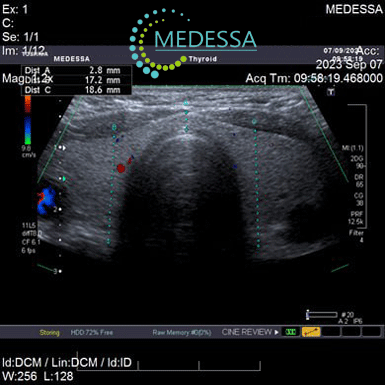
What the scan can show
The clinician assesses nodule size, composition, margins and echogenicity. The combined findings help determine whether monitoring or needle sampling is needed. Ultrasound does not measure hormone levels or establish tumour type on its own.
Nodule categories and decisions about sampling
You may see a TI-RADS category in the report. It summarises the nodule’s ultrasound features. The category, size, previous images and clinical findings help guide follow-up or needle sampling. A blood test such as TSH answers a different question about how the thyroid is working.
Preparation and what to expect
Fasting is usually unnecessary. You lie on your back while a probe is moved over the front of the neck. Bring earlier images, reports and blood results if available.
When further tests can help
MRI is not routine for thyroid nodules. CT or MRI can map the extent of a goitre that may extend behind the breastbone or assess possible involvement of nearby structures. The clinical question guides the choice.
Results and next steps
Discuss the report with a clinician who can consider your symptoms and blood tests. Sudden severe breathing difficulty needs emergency care.
Frequently asked questions
Does every nodule need a biopsy?
Size and ultrasound features guide the decision. Some nodules can be monitored.
Does ultrasound show my TSH level?
TSH is measured in a blood test. The scan shows the structure of the gland.
What does TI-RADS mean?
It is a system for classifying nodule features. It can guide follow-up or sampling.
Can I eat before the scan?
Fasting is usually unnecessary for a routine thyroid scan. Blood tests scheduled the same day may have different instructions.
Should I remove necklaces?
This makes it easier to reach the front of the neck. An open-neck top is also useful.
Why bring earlier scans?
Past images and measurements help assess changes over time. Bring them if available.
Does the scan use radiation?
The images are made using sound waves. Ultrasound does not use ionising radiation.
Will I need a contrast injection?
The standard scan described here does not usually require contrast. Check the separate instructions if another test has been ordered.
Can I resume my usual activities afterwards?
Routine diagnostic ultrasound generally requires no recovery. A separate procedure may have its own aftercare instructions.
Who decides what happens after the report?
Review it with the clinician who requested the scan. They can interpret the findings alongside your symptoms and other test results.
Medical sources and guidelines
Last updated:
Thyroid ultrasound: 800 ₴
This article is for information only.