MEDESSA · ODESA
Breast ultrasound
Breast ultrasound gives a targeted view of a lump or another local change. It can distinguish a simple fluid-filled cyst from a finding that needs further assessment.
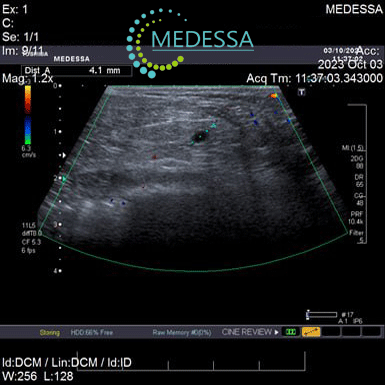
What the scan can show
Your clinician may recommend it for a new lump or to clarify a finding on a mammogram. The first imaging test depends on your age, symptoms, pregnancy status and individual risk. A persistent lump still needs clinical assessment after a normal ultrasound.
When follow-up or biopsy may be needed
A BI-RADS 3 assessment usually leads to follow-up imaging at a recommended interval. A suspicious BI-RADS 4 finding usually prompts consideration of biopsy. If you can still feel a lump, your clinician should compare that exact area with the examination and images, even if ultrasound did not show an abnormality.
Preparation and what to expect
The clinician applies gel and moves the probe across the skin. Special preparation is usually unnecessary. Bring past images and reports so any changes can be compared.
When further tests can help
Breast MRI has specific roles, such as screening people at high risk or assessing the extent of a known cancer in selected cases. Clinical examination, ultrasound, mammography and biopsy when indicated guide assessment of a new lump.
Results and next steps
A BI-RADS category can guide follow-up. Discuss the results with your clinician, especially if you notice new nipple inversion, skin changes or bloody nipple discharge.
Frequently asked questions
Can ultrasound replace mammography?
The two tests show different features. Age, symptoms and individual risk inform the choice.
Should I wait for a particular cycle day?
Ask for clinical advice about a new change regardless of the day of your cycle. For a routine test, check with the clinic when booking.
What does BI-RADS mean?
It is a standard category for reporting breast imaging. It helps guide follow-up or biopsy.
What if I still feel a lump after a normal scan?
Tell your clinician. Depending on the examination, another test may be needed.
Can I have the scan while breastfeeding?
Ultrasound can be used during lactation. Tell the clinician that you are breastfeeding and describe your symptoms.
Should I bring my last mammogram?
Bring it if available. The images and report can help compare findings across tests.
Does the scan use radiation?
The images are made using sound waves. Ultrasound does not use ionising radiation.
Will I need a contrast injection?
The standard scan described here does not usually require contrast. Check the separate instructions if another test has been ordered.
Can I resume my usual activities afterwards?
Routine diagnostic ultrasound generally requires no recovery. A separate procedure may have its own aftercare instructions.
Who decides what happens after the report?
Review it with the clinician who requested the scan. They can interpret the findings alongside your symptoms and other test results.
Medical sources and guidelines
Last updated:
Breast ultrasound: 800 ₴
This article is for information only.