MEDESSA · ODESA
Abdominal ultrasound (liver, gallbladder, pancreas and spleen)
This MEDESSA examination covers the liver, gallbladder, pancreas and spleen. It may be requested for right upper abdominal pain or to investigate abnormal blood tests.
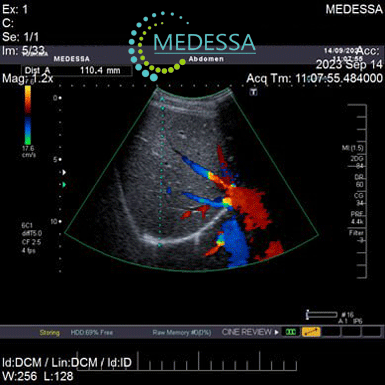
What the scan can show
Ultrasound may show gallstones, enlarged bile ducts, changes in organ size and some abnormalities in tissue appearance. Bowel gas can hide parts of the pancreas. Findings are interpreted alongside symptoms and test results.
Gallstones and bile duct findings
Gallstones are sometimes found by chance. Your clinician considers your symptoms to decide whether they explain the pain. If the ducts are enlarged or blood tests suggest impaired bile drainage, further assessment may help even when no stone is visible on ultrasound. MRCP can provide a closer view of the ducts.
What partial visualisation of the pancreas means
Bowel gas can obscure part of the pancreas. The report can document which parts were visible. When acute pancreatitis is suspected, clinicians consider the pattern of pain and blood lipase levels. CT or MRI may help if the diagnosis is uncertain or complications are suspected.
Preparation and what to expect
The clinician moves a gel-covered probe across your abdomen and may ask you to turn or briefly hold your breath. A gallbladder scan often requires fasting. Ask the clinic for preparation and medication instructions.
When further tests can help
If a bile duct blockage is suspected, MRCP can provide a closer view of the bile and pancreatic ducts. An uncertain liver lesion may require a separate MRI protocol.
Results and next steps
Seek urgent medical help if severe abdominal pain occurs with fever or yellowing of the skin or eyes.
Frequently asked questions
Do I need to fast?
Fasting is often requested for gallbladder imaging. Confirm the interval when booking.
What if I have diabetes?
Tell the clinic when booking. Agree on fasting and medication instructions with your clinician before making changes.
Why might part of the pancreas be hidden?
Bowel gas can block the view. The clinician considers which parts could be assessed.
Can the scan see bile duct stones?
Some duct stones may be missed. Blood tests and signs of obstruction can guide the choice of MRCP or another test.
Are the kidneys included?
This service covers the liver, gallbladder, pancreas and spleen. Ask separately about kidney imaging.
Does every scan need MRI follow-up?
If ultrasound answers the clinical question, more imaging may add little. MRI is selected to clarify specific findings.
Does the scan use radiation?
The images are made using sound waves. Ultrasound does not use ionising radiation.
Will I need a contrast injection?
The standard scan described here does not usually require contrast. Check the separate instructions if another test has been ordered.
Can I resume my usual activities afterwards?
Routine diagnostic ultrasound generally requires no recovery. A separate procedure may have its own aftercare instructions.
Who decides what happens after the report?
Review it with the clinician who requested the scan. They can interpret the findings alongside your symptoms and other test results.
Medical sources and guidelines
Last updated:
Abdominal ultrasound (liver, gallbladder, pancreas and spleen): 900 ₴
This article is for information only.